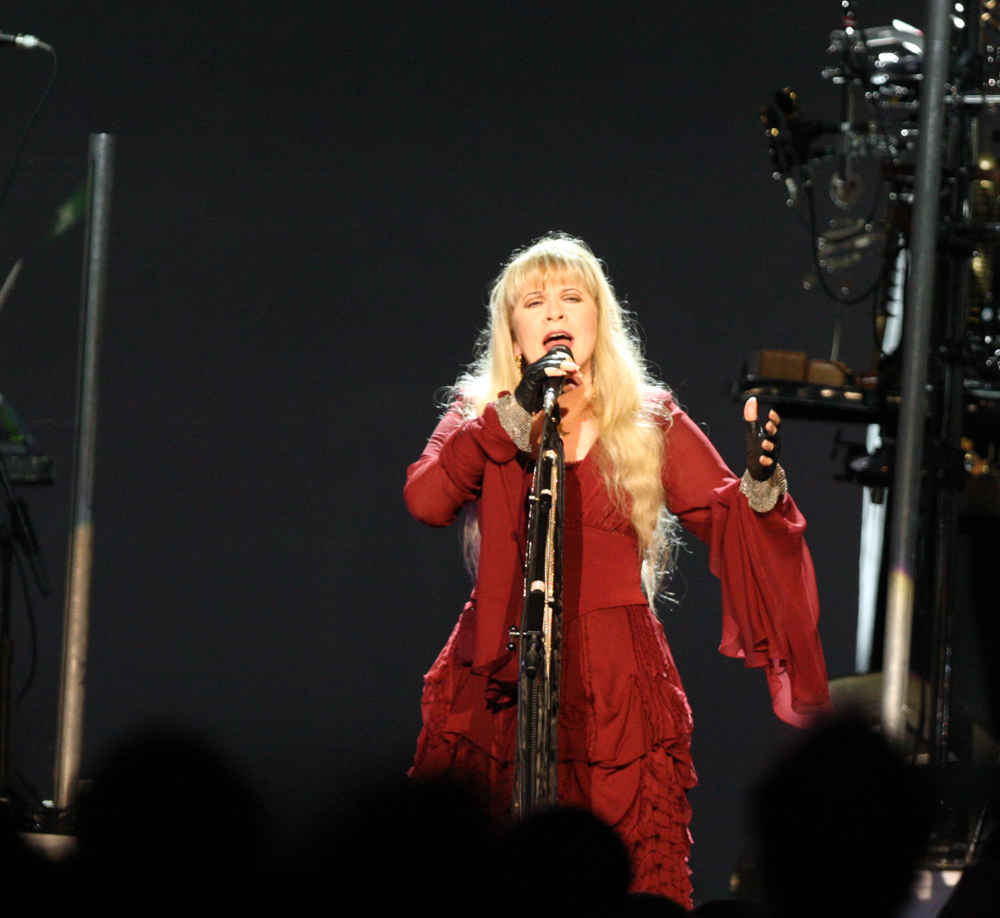
Stevie Nicks built one of music’s most recognizable visual identities through flowing dresses, platform boots, shawls, long hair and an almost mystical stage presence.
Photographs from different decades show changing fashions, but Nicks rarely abandoned the romantic style that eventually became as instantly identifiable as her voice.
Stevie Nicks Started With Buckingham Nicks

Stevie Nicks was still far from superstardom when she and Lindsey Buckingham released the Buckingham Nicks album in 1973. Vogue notes that she was working low-paying jobs around that period while pursuing music. Early photographs already show elements audiences later associated with her—long hair, romantic clothes and an unpolished California-bohemian quality. The album initially failed commercially, but it became the unlikely doorway into one of rock history’s most famous bands.
Stevie Nicks Joined Fleetwood Mac in 1975
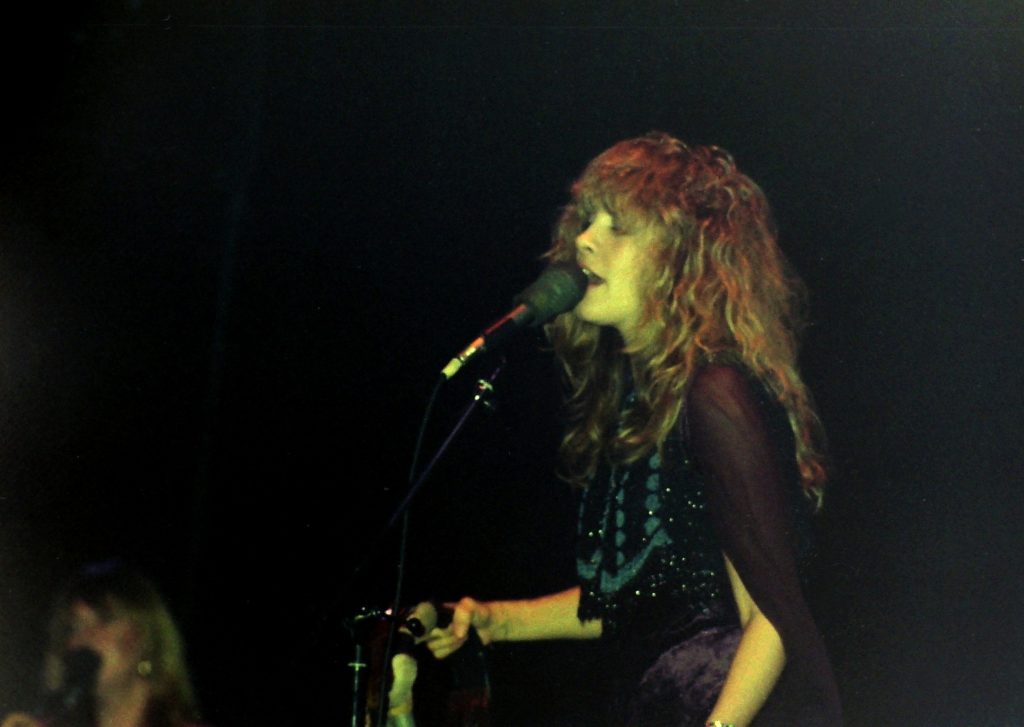
Stevie Nicks and Lindsey Buckingham joined Fleetwood Mac at the end of 1974, appearing on the band’s hugely successful 1975 self-titled album. Nicks contributed songs including “Rhiannon” and “Landslide,” quickly becoming a visual and musical focal point. Photographs from this period capture the moment before her stage persona became fully codified: long blonde hair, layered fabrics and a naturalistic style that contrasted with the louder glam-rock aesthetics surrounding much of the decade.
Stevie Nicks Defined the Rumors Era

Stevie Nicks reached another level of fame with Fleetwood Mac’s Rumors. The album emerged while relationships inside the band were collapsing, including Nicks and Buckingham’s. Yet photographs from the era often show remarkable control: Nicks projected ethereal confidence even when the group’s private circumstances were turbulent. Her flowing stage clothing and dramatic silhouettes increasingly became part of the Fleetwood Mac visual language, creating some of the images fans most strongly associate with 1970s rock.
Stevie Nicks Made Bohemian Style Her Uniform
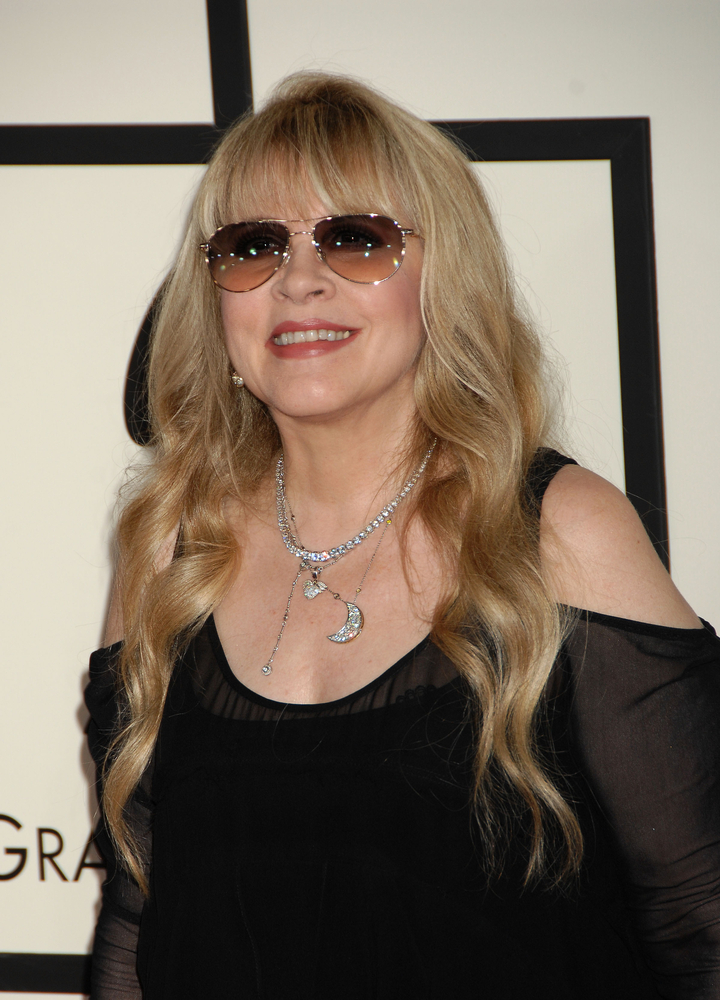
Stevie Nicks worked with designer Margi Kent to develop clothing that moved dramatically onstage while retaining a timeless quality. Velvet, lace, chiffon, platform boots, bell sleeves and layered skirts became recurring elements. Vogue has noted that the consistency of this wardrobe helped turn it into a genuine signature rather than a passing 1970s trend. Nicks understood that a recognizable silhouette could become part of an artist’s storytelling long before celebrity “branding” became routine.
Stevie Nicks Became a Solo Star in 1981

Stevie Nicks launched her solo career with Bella Donna in 1981 while remaining connected with Fleetwood Mac. The album reached No. 1 and included enduring songs such as “Edge of Seventeen” and “Stop Draggin’ My Heart Around.” Her solo success allowed the Stevie Nicks image to exist independently of the band: romantic, mysterious, and unmistakably feminine without abandoning rock intensity. The period produced many of her most familiar portraits and performance photographs.
Stevie Nicks Made Shawls Her Signature

Stevie Nicks’s shawls eventually became almost inseparable from her stage persona. Vogue has singled them out as one of celebrity fashion’s most identifiable signature accessories. The visual effect mattered during live performances because the fabric exaggerated every turn and raised arm, giving movement to songs that often used supernatural or dreamlike imagery. Numerous performers have subsequently borrowed elements of the aesthetic, yet a fringed black shawl still immediately invites comparisons with Nicks.
Stevie Nicks Still Owns Her Look in 2026

Stevie Nicks proved the style still works when she made her Met Gala debut in 2026. She appeared in a theatrical John Galliano design involving midnight-blue silk, tulle, chiffon and a feathered top hat. Rather than abandoning the visual language developed decades earlier, Nicks translated it into formal couture. At 78, she demonstrated why her strongest photographs do not belong to only one youthful period: the image evolved while remaining unmistakably hers.
Featured Image: By Eva Rinaldi – Flickr, CC BY-SA 2.0, https://commons.wikimedia.org/w/index.php?curid=36957577
Leave a Reply